

Commemoration Day speech by Helene Young (1980)
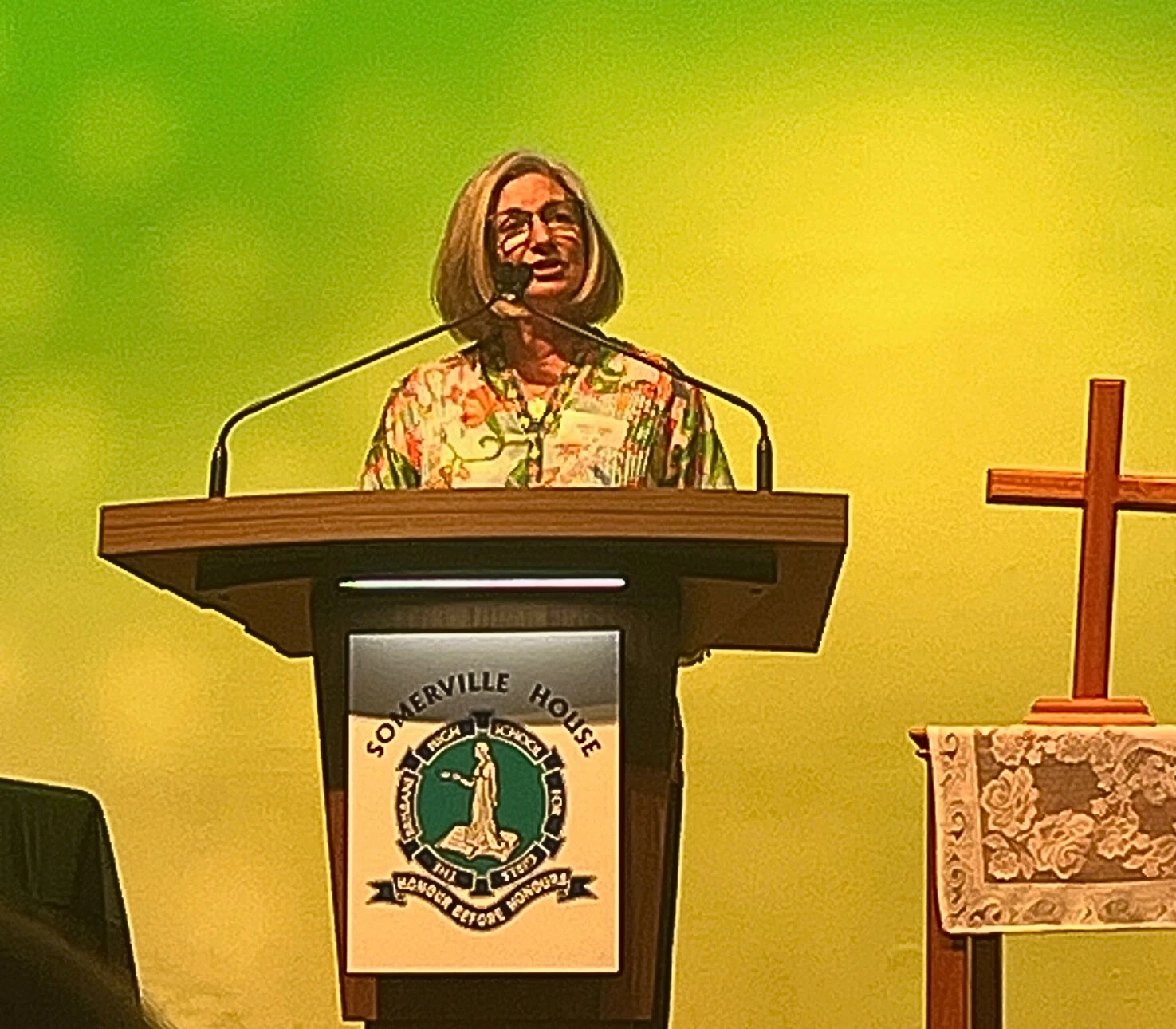
Thank you for the lovely welcome to Somerville House. It’s such an honour to be here. 45 years ago, I headed out the Graham St gates, and I’ve carried a little piece of Somerville with me ever since.
When Sue Folliott invited to come and talk to you I thought, ‘what can I possibly share with a vibrant group of young people?’ I remember being 14 and knowing with certainty anyone over the age of 50, including my parents and teachers, had absolutely no idea about anything important.
But my niece, who’s in her mid-twenties, reminded me what I’d said to her when she left school. ‘The choices we make at school don’t define us.’
‘You’re proof of that, Aunty Lene,’ she said. ‘You’ve made some different choices in your life!’ And she’s right. My career path hasn’t been straight forward and yet every step has drawn strength from what’s gone before. So, this is my story, maybe it will spark interest in a career you’ve never considered before or simply reassure you that the choices you make as you leave school don’t define you. Those choices set you on a pathway that always has junctions and crossroads where you can change direction.
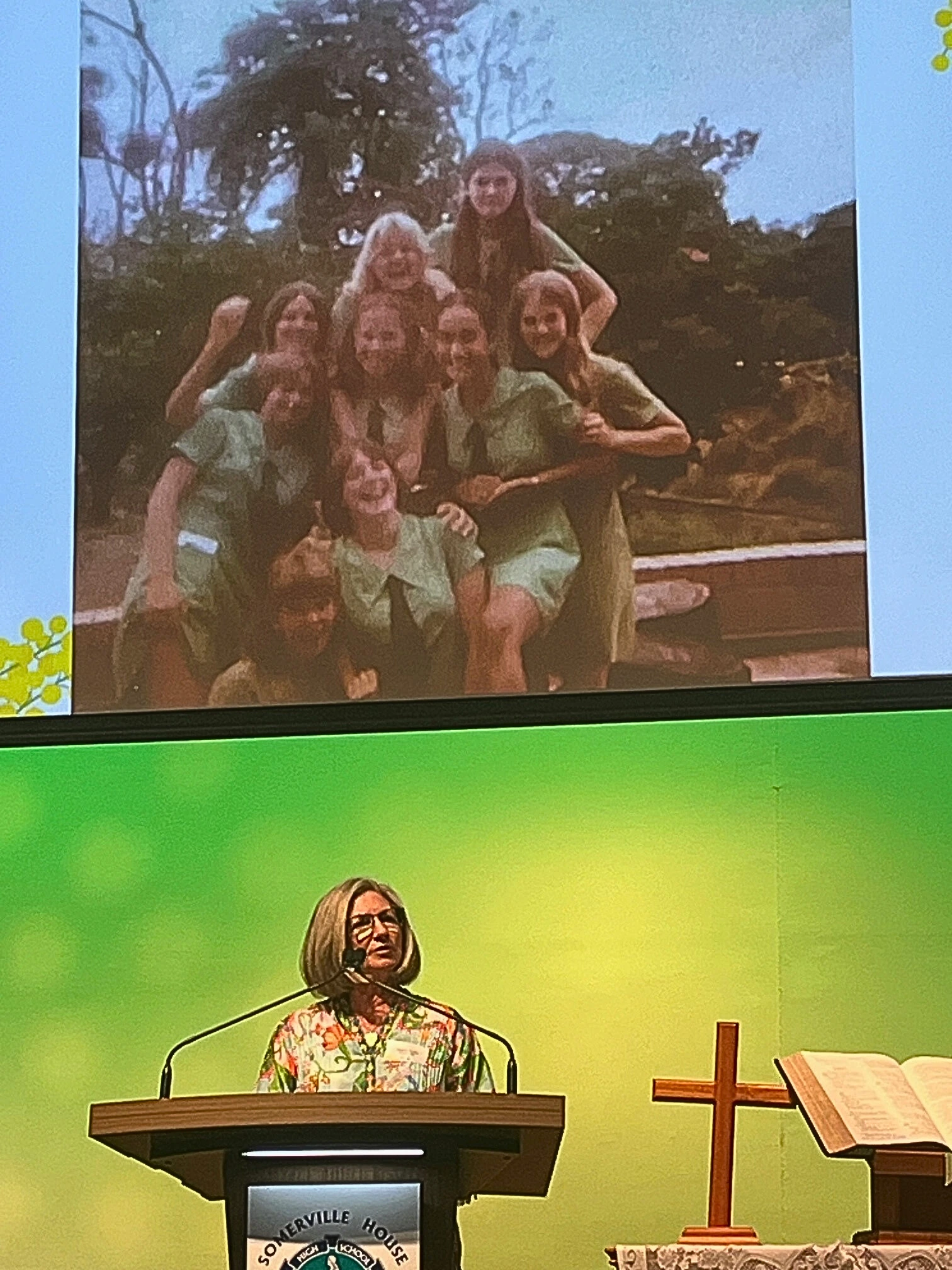
I enjoyed school, the friendships, the camaraderie, the crazy lunch hours. I loved English, history, economics and biology. I loved physics, but physics didn’t initially love me. I had teachers who encouraged and nurtured my curiosity. And some who despaired of turning me into a young lady. I loved swimming, athletics, netball, volleyball. I loved to surf in an era when girls simply didn’t do that. I loved working beside my dad in his workshop.
But I didn’t have a clear idea of where to next. Environmental science, journalism or write a novel even? Run a restaurant? Or pursue outdoor ed? A photographer, if that was even a career?
In 1979, I was in Grade 11, when a female pilot called Debbie Wardly/Lawrie, took Ansett Airlines to court for the right to fly a commercial jet aircraft, and she won. That court battle was a turning point for me. I’d finally seen something that inspired me, although it would be a few more years before I took action to follow that dream.
Our guidance counsellor suggested nursing or teaching, which was so far from flying that I didn’t even consider them. With hindsight she might just have been right about teaching being a good fit for me.
Leaving school I started an Environmental Science Degree. I was going to save the humpback whales, but by the end of the year it was clear the degree was all about data and statistics and no one had allowed me to go swimming with the whales! How could I save them if I was stuck in a room analysing data? Of course, analysing data is a large part of marine research, but I hadn’t worked that out then.
Next I completed a Diploma in Community Recreation and headed to the UK where I secured a job in the Lake District as an adventure sports instructor.
It was early February, deep winter, when I stood on the edge of Derwent Water, snow flurries drifting down, and looked at the ice floating on the lake and the six shivering children beside me. ‘You want me to teach windsurfing in that?’ I asked my boss. A few weeks earlier I’d been windsurfing at Currumbin Beach in the middle of a hot Aussie summer. This was madness.
Turns out, once I bought a very thick wetsuit, it was also a whole lot of fun! I stayed for three years and accumulated a boyfriend, a dodgy knee, a love of hiking, kayaking, and sailing, and a love of teaching. I also had a sideline job as a waitress, a skill that came in handy later.
Eventually, I returned to Brisbane, and, after eight years of dreaming about it, I started flying lessons in 1988. By day I flew and by night I worked as a waitress to pay for my flying lessons.
Remember earlier I said physics didn’t like me? Turns out that with a practical application physics and I could become best friends. I loved that aviation was fact based, not subjective. A pilot must be precise, use checklists, follow procedures. I loved the predictability of an aircraft and best of all I loved the view – the very best office view in the world.
The boss of the flying school encouraged me to do an instructor rating so I could teach others to fly. He was particularly keen because his daughter wanted to fly and he wanted a female role model for her. Dana Bradberry is now a 737 Captain with Qantas and a good friend.
I loved instructing and the skills I’d developed in outdoor ed came in handy. Some of my best memories are sending young pilots off on their first solo flight. I can assure you they did all land safely!
I was also involved in an ongoing Dugong survey. I flew five scientists over Moreton Bay so they could count the dugongs and determine any changes in population numbers. Since I hadn’t managed to save the humpback whales it was immensely satisfying knowing my flying could help protect the dugongs.
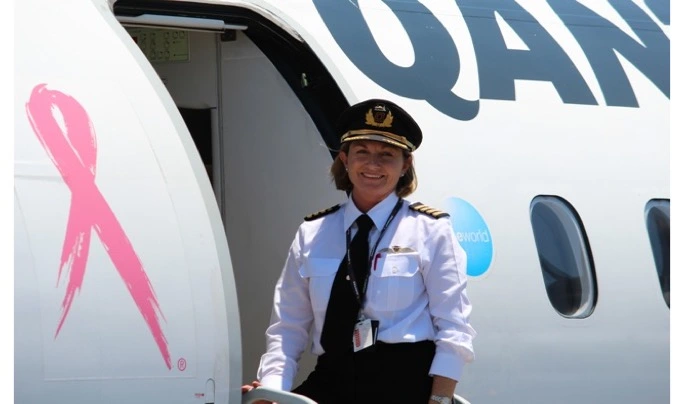
Eventually I moved to Sunstate Airlines/Qantaslink and we moved to Cairns. At the time industry wide about 2% of pilots were women and QantasLink was no different. There were just two of us – Sue was in Brisbane and I was in Cairns - so our paths rarely crossed. Sue and I, with Julie our cabin crew, were QantasLink’s first all female crew on a Shorts 360 in 1999.
The career progression at an airline is straightforward from First Officer to Captain.
Once I’d become a Captain I started looking for the next challenge. The eight years I’d spent as a flying instructor helped me transition to line training captain, simulator trainer and eventually a Check Captain who could test all our pilots. I was the first woman in QantasLink to achieve that qualification.
For those of you who enjoy computer games you’d love the simulators. They’re an amazing training tool that allows pilots to practice all sorts of emergency situations without any jeopardy. Basically a computer game on a grand scale.
By then more women were joining our ranks and women pilots now make up 24% of the Qantaslink flying group.
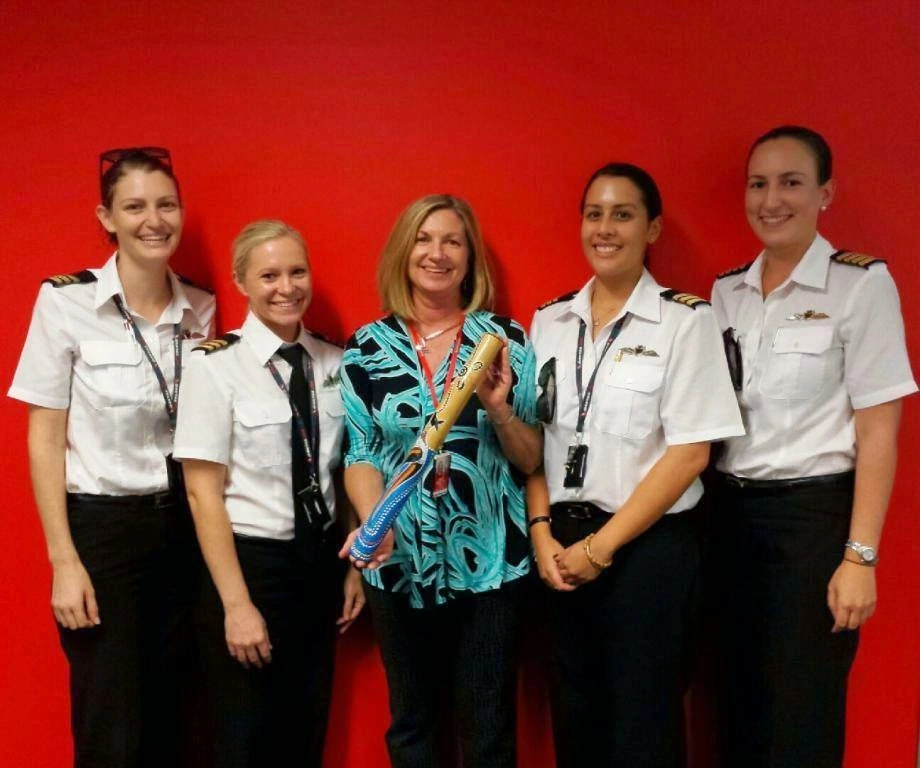
The four young women in this photo are holding a baton that was flown all the way around Australia being passed from female pilot to female pilot as an initiative to show young women they too could take to the skies.
While I loved my career in aviation, I was also spending a lot of time away from home, living in hotel rooms. That was the trigger for my next career sideline. Published author.
There’s an old adage - ‘write what you know.’ What I knew was flying and remote north Queensland. My first book was set in Cairns and my heroine was a Captain flying the surveillance aircraft around the coast of Australia with a female first officer. No surprises there really.
My seven books have given me the opportunity to showcase jobs not always seen as suitable for women - war correspondents, fire fighters, chefs, pilots, remote area doctors, cattlewomen, and concert pianists. The characters were all inspired by women I’d met.
Writing is as much about perseverance as raw talent, but if that is your passion then write because you love creating, entertaining and challenging readers, and see where it can take you.
I planned to keep flying for many years, but in 2013 I developed vertigo and, trust me, no one wants a dizzy pilot at the controls. The specialists had no definitive diagnosis. The last chap decided medication was the answer. ‘DO NOT OPERATE HEAVY MACHINERY’ the label said in bold, underlined capitals. I was pretty sure an aircraft was classed as heavy machinery…
The Civil Aviation Safety Authority shared my opinion, so I was grounded. My boss had suggested I to Brisbane and take up a management role and I no longer had an excuse to refuse. So we packed up our house and moved aboard our new forty foot catamaran and sailed south to Brisbane where I took on the role of Qantaslink Regional Flying Manager for QLD and SA, another first for a woman.
The next two years were fascinating, educational and so very rewarding as I learnt to manage the 262 pilots in my care. But it wasn’t the same as flying an aircraft and the call of adventure was strong.
My husband and I had always planned to sail around Australia in our retirement. With only a management job in my future we made the choice to sail away very early.
The marine world, like aviation, has many opportunities that aren’t always visible. If being on or around the water makes your heart sing then perhaps there’s a career for you on the waves.
So many aviation skills transferred across to a life afloat – navigation, passage planning, reading the weather, understanding engines and electrics.
In the last 10 years we’ve explored the east Coast of Australia to Tassie, around to South Australia and back up again. We’ve been to New Caledonia and Vanuatu. But the place I love most is the Great Barrier Reef.
The Great Barrier Reef is enormous and trying to accurately survey its health is difficult. Citizens of the Reef is an initiative that blends science, AI and people power to record data. People like me, who can access remote reefs, upload photos from those areas to the Citizens of the Reef site. From there other volunteers, sitting in their homes or offices, analyse those photos using AI to capture an accurate record of that particular reef.
Whilst it’s not a paid career, it feels as though I’ve circled back to all the things that interested me at school. So many of the skills I’ve accumulated during my working life now have another purpose. What you learn today may just help you in the years to come and you have no way of knowing yet what skills are transferrable nor where they may lead you.
I recently sat on Roobi’s rear deck, surrounded by metres and metres of sail bag, stitching in a new zipper. 50 years ago I battled a sewing machine in Grade 8 home economics. At the time I could see no purpose at all for having to unpick and resew a zipper until I had it straight. How wrong was I!
So, to all of you, students, staff and past students, remember to always maintain your curiosity, ask questions, and never assume.
Be courageous, be brave - taking chances, changing course takes courage and conviction, but the choices we make don’t define us. They are just one step in our journey.
Build resilience. We will all make mistakes, or choices we wish were different with hindsight, but it’s what we do with those moments that shape us.
Be kind, to yourselves, to those you love, to colleagues, to strangers. It is a truism that a smile costs nothing, but it just might make a difference to someone else's life.
Somerville House has given us a moral compass to guide us and a solid foundation, a spring board if you like, to launch ourselves.
So, over to you.
You’ve got this.
Grab your big, beautiful life and choose where you take it.