
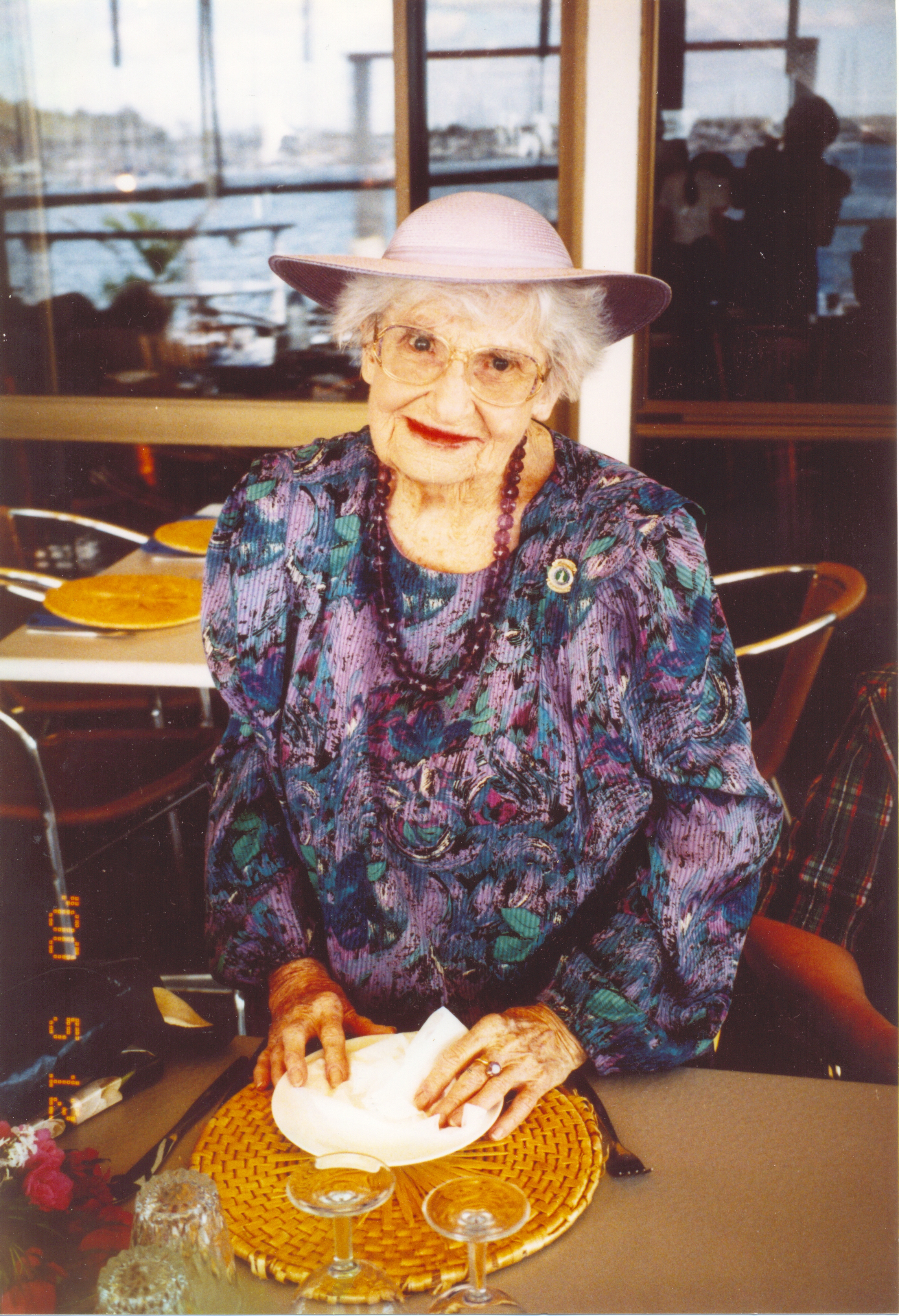
Inspirational OG Jessie Andrews (Class of 1928) - Legacy of Andrews' Cup
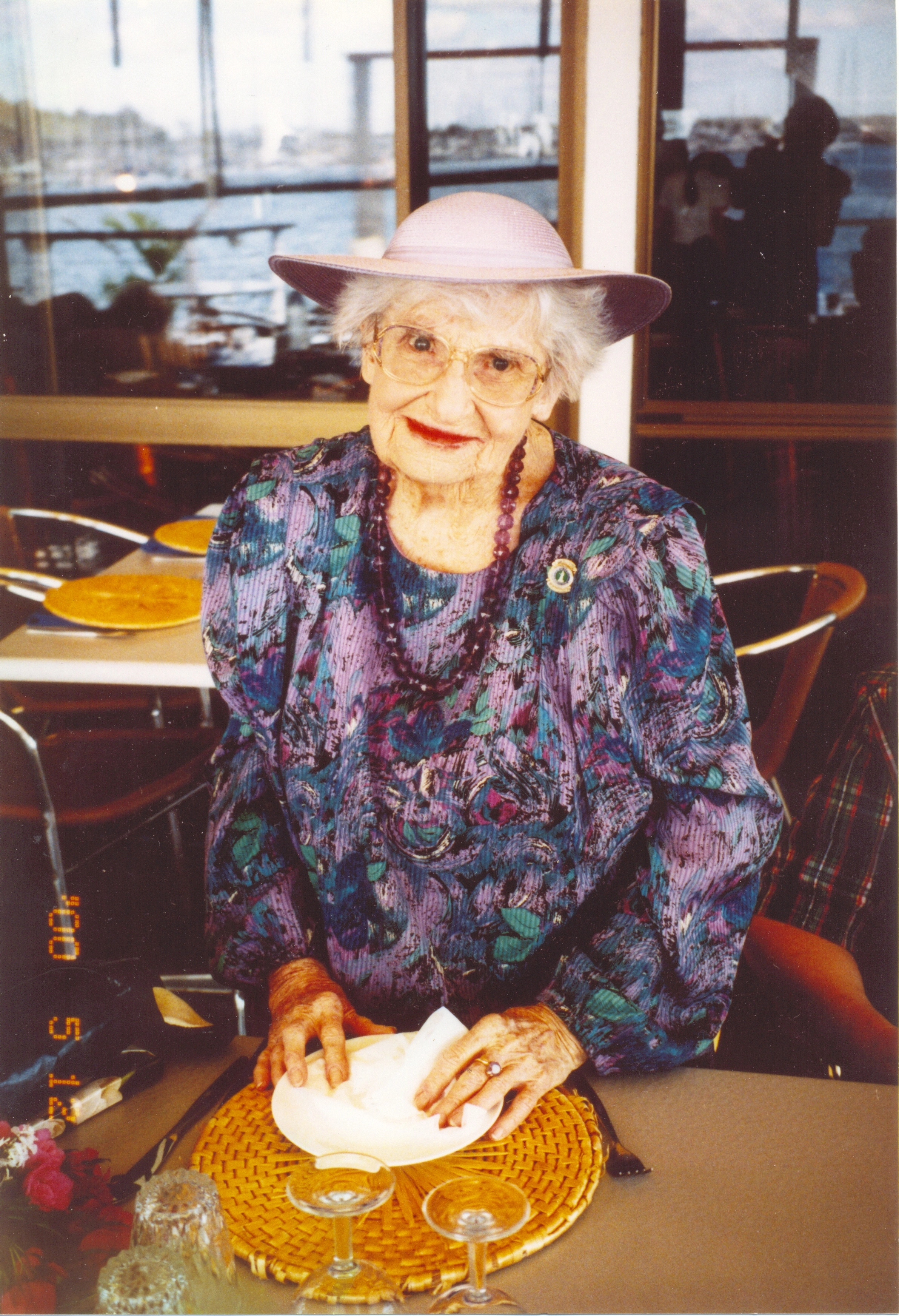
Our Inspirational Old Girl series pays special tribute to Old Girl and past teacher Jessie Andrews (Class of 1928) (1910 - 2008) - Champion of Somerville House.
It is particularly fitting that we pay tribute to Jessie in this year, 2022 - with the announcement of Brisbane as host city for the 2032 Olympics as well as Somerville House embarking upon their largest ever investment in a sporting facilities, establishing the Dunn Road Sporting and Recreational Precinct, "Somerfields". As co-founder of the legendary Andrew's Cup with her sister Isabel Andrews (also a past teacher of Somerville House), Jessie Andrews has played an incredible part of sporting history for Somerville House in addition to her many other achievements.
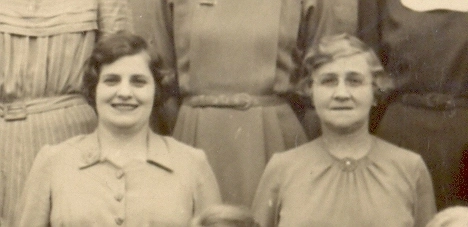
Jessie Andrews (left) and Isabel Andrews (right) while both on teaching staff at Somerville House.
Jessie was a student of Brisbane High School for Girls (later Somerville House) entering the scholarship class from 1924 to 1927. She joined the OGA in 1928 and in turn held the office of Treasurer, Secretary and Vice President staying actively involved in the committee for more than 65 years. Jessie become a member of Somerville House staff between 1936 to 1955 initially teaching bookkeeping and completing Secretarial work. Following WWII she went on to teach Commercial subjects and later served as honorary secretary to the Principal and held duties of Form Mistress and Senior House Mistress serving as a staff member for an incredible 41 years. Somerville House archives have been named the "Jessie Andrew's Archives" in honour of the instrumental role Jessie played in the early years of the archives.
Early in Jessie's time on staff at Somerville House she observed there was an established competition for senior school students between the independent high schools at the time, however there were few independent schools that had primary school and therefore no established junior school competition. At the time there was no inter-house sport and the junior school students would only compete interform with both Jessie and her sister, Isabel, identifying that they were unlikely to be successful in sport without more opportunity for organised competition. Jessie had noted the junior school girls keen interest in sports "they were so terribly keen" and discussed with her sister, Isabel, the idea of donating a trophy for competition between the Junior Schools of Somerville House and Clayfield College (which had just started at the time and was too small to be part of the "GPS competition"). Jessie tells that her sister was keen on the idea but said "It's got to be yours" and told Jessie to speak with Miss Jarrett. Principal Miss Jarrett supported the idea of the donated trophy and the Andrew's Cup was born.
The prestigious Andrew's Cup trophy was first given out in 1938 by Jessie Andrews for an inaugural inter-school competition in swimming, tennis, basketball, and athletics between Somerville House, Clayfield College and later Moreton Bay in 1944. During 1945 to 1955 Jessie was responsible for running the Somerville House swimming program, organising team practices, school carnivals and the Andrews Cup. After some time the Jessie Andrew's Sports Association was developed to run the competition and remains the organising body. In 1962 the association contacted Jessie for her approval of "the Saint Schools" who had requested to join the competition. This led to St Margarets, St Hilda's, and St Aidans joining the "Friendly games" as they were called at the time. The Andrew's Cup competition continues to be the core competition to this day between the independent Junior (Primary) Schools. By 1965 the inscription space on the cup was filled and Jessie donated a second cup in use until 1992. A third cup was required between 1993 to 2006 and since 2008 there have been individual cups awarded to each sport for the winning school.
In 2001 Jessie was awarded a Commonwealth Recognition Award for Senior Australians. At 96 years of age Jesse can be seen pictured below presenting Arna Bennett (President of Andrews Cup Sports Association and Head of Somerville House Junior School at the time) along with Old Girl and Olympian Libby Lenton (now Trickett, Class of 2002) another 11 silver trophies for the Andrew's Cup competition - demonstrating her unwavering support of female sport. Jessie's ability to continue to see through this landmark change in sporting competition for the independent junior schools made all the more remarkable given the timing of the formation of the Andrew's Cup competition just prior to WW2.
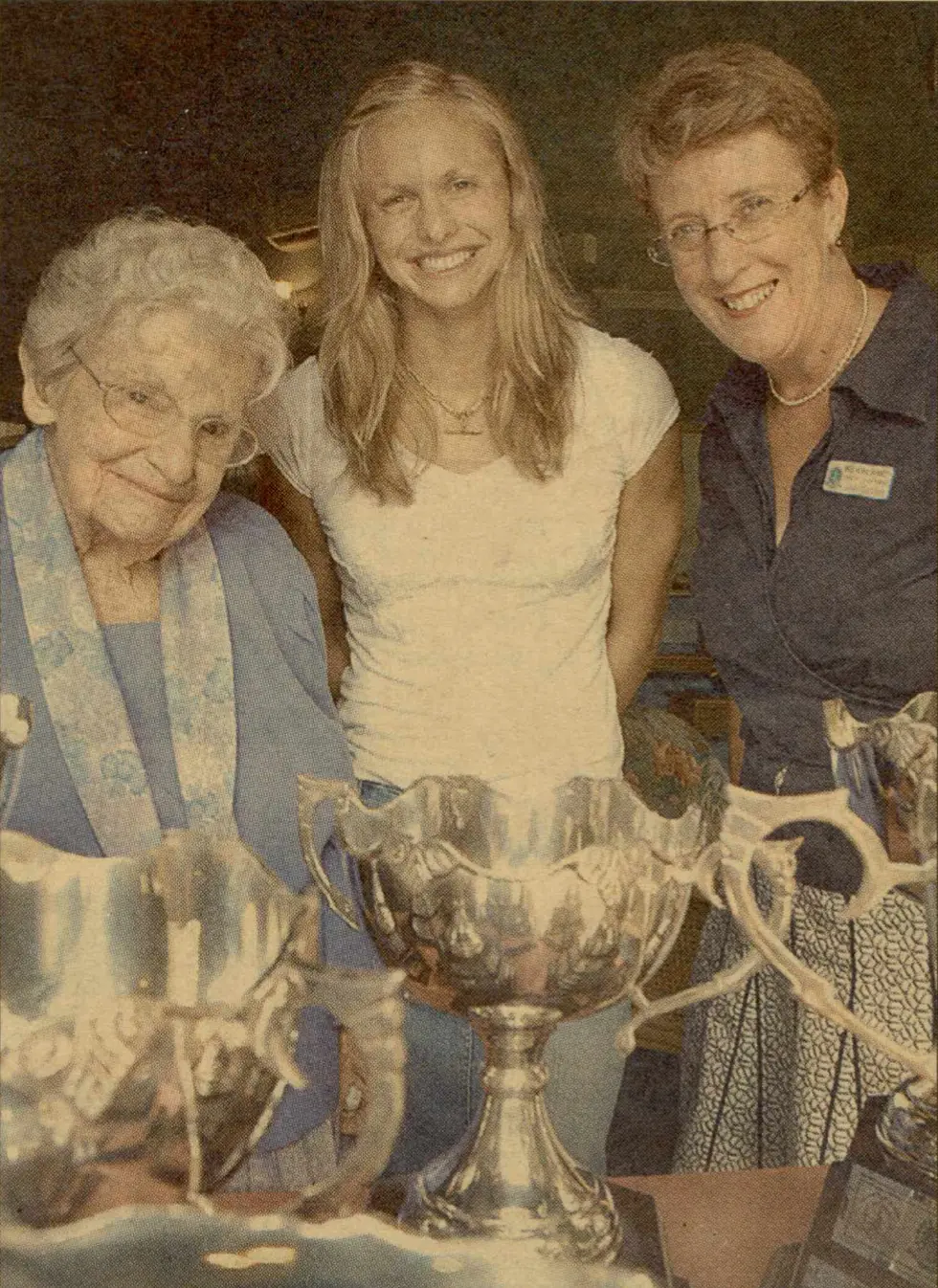
Jessie Andrews, Libby Lenton (Class of 2002) and Arna Bennett (President of Andrews Cup Sports Association) - Courier Mail, 2007 "Trophy Presentation"
During Jessie's time she oversaw enormous change in the school and operations including during WWII, which provides interesting insight while reflecting back on the past of the school. Jessie gave an interview as part of the Somerville House Centenary celebrations in 1993 providing her insights. In her earlier days as a teacher Jessie explained that two teachers from each form would meet in the lunch hour to discuss changes and how to spend money from the "Sports Club". Part of each student's fees at the time included a contribution to the Sports Club which the PMSA would organise. Teachers would then decide where it would be spent. Following the war years Jessie explains that the Sports Club was "wiped out". Charitable work was a strong focus for both the girls and the staff. Jessie describes use of a "Cot Fund" during the war, later known as the Charities Fund. "It was a penny a week to provide the wool for them to knit things to send to the soldiers, then after the war the girls decided they would like to continue with it and it gradually got bigger and bigger over the years" and was run by the girls. The funds went to a number of charities with assistance for the blind holding a special interest with Miss Harker having taken up Braille writing. During the war years while Somerville maintained split campuses, Jessie was based at Auchenflower but still spent the afternoons at the Queen Alexandra Home at Coorparoo. The boarders were based out at Stanthorpe. Getting across town via public transport at this time was no easy feat! Jessie would catch the tram down to Lennon's Court while eating her lunch where all the military were present and then "push through, dashing along to the Treasury" and catch another tram to Coorparoo junction and just as she would "get inside but at the bottom of the steps and the afternoon bell would ring". She describes sometimes getting the last tram home after completing all of the secretarial work, which was near midnight. It's possible to see what a commitment the teachers demonstrated over this period to be able to cover both campuses. On being asked why Jessie would do all of that extra work, Jessie replied "Well it was my school and I loved it. I loved every minute at school. I really did. I mean I joined everything I could and I'm a bit envious of the things they have nowadays." Jessie's account of the students' experience during this time focusses on a picture of resilience telling "During the air raid alarms everyone at the Queen Alexandra Home marched to the shelter under the building, next to the Chemistry laboratory! To pass the time my sister always had the girls singing.... the girls coped well with their new surroundings, but it in Brisbane meant all work - no play or sport." Of Somerville staff socialising with the Americans while they remained at Somerville House during WW2 on the bottom level with staff and the girls on the upper level, Jessie says "It was absolutely forbidden, for one thing they didn't want the girls to have contact with them, therefore the staff must set the example." Jessie continued as staff at Somerville House for an incredible 41 years of service, retiring in 1977. An account by Miss Ruth George highlights Jessie's willingness to always go above and beyone with her recollection of Jessier as Form Mistress of 11C, 11F and 12F "she did much to provide good training for these classes with visits to business houses, extra lessons - often in her "free time" to improve standards". Even after retiring Jessie volunteered to assist in the school bookshop a couple of times a week.
Jessie's contributions to the OGA over more than 65 years of association are further evidence of the incredible passions she had for the school. Jessie initially held the position of Treasurer and then later Secretary from 1937 - 1964 and Vice President from 1964 - 1975. On commemoration day in 1975 the OGA bestowed on Jessie Honorary Life Membership of the OGA. It is possible to see the pride and importance of her time with the OGA in transcripts from the Centenary celebrations in 1993 (Jessie still actively involved on the OGA at this time as a life member) with audio interviews retained by the State Library. She states that as she joined, the OGA "finished the library and I took over from there because we were going to build the art studio on to the library". Jessie describes being on the OGA at the time as "quite an occasion". "The ladies.....would dress for dinner.... in our long frocks". Jessie also pays tribute to legend Isabel Bauer (President of the OGA at that time) in her interview "Isabel's done a very good job with the way she's managed to mix the committee with young and old and....there's a big crowd up there" with sometimes 100 turning up to Commemoration Day. Prior to the establishment of the Foundation the OGA would be responsible for providing all of the "extras" to the school including "scholarships and equipment". Jessie also described the OGA and Parents and Friends working together in 1992 to raise "several thousands" for the school at an ice cream stall at the Exhibition.
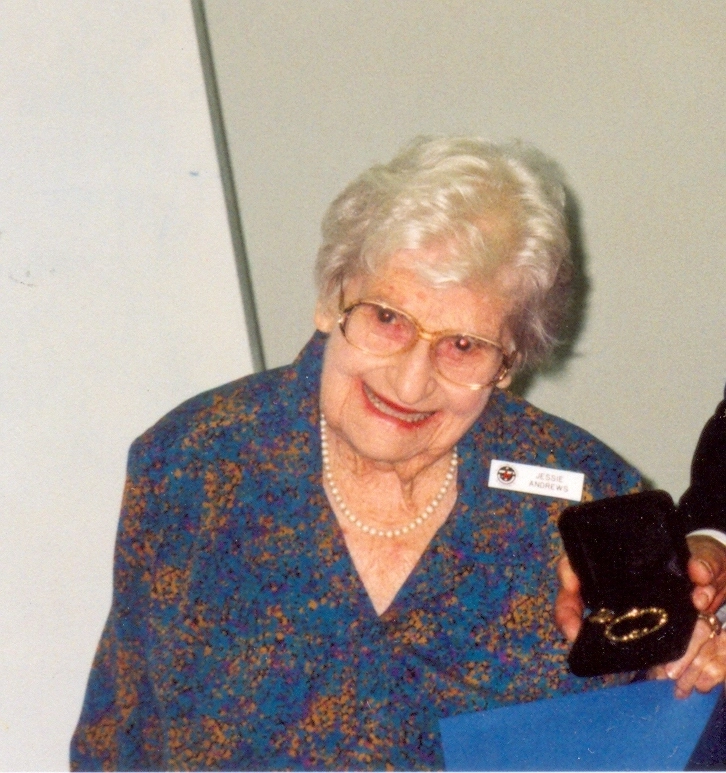
Jessie's enormous contributions to the archival records for the school include her creating a record of all students who attended the school for approximately fifty years from a card system started by the Secretary at the time Miss Kristina Wilson from 1912 (stored by the Royal Historical Society of Queensland). Understanding the value of recording updated information on Old Girls who had attended the school, Jessie would add details to the back of the cards about any changes to name and what they were doing creating a wealth of information on the women of this time. The PMSA granted permission for the archives to be called the "Jessie Andrews Archives" at the Centenary Commemoration Day.
Jessie reminds us that one person's ideas and conviction to them can lead to incredible outcomes for future generations of students.........her love of Somerville House her source of inspiration.
** Please note the following references for any direct quotes
Direct quotes have been taken from taped manuscripts of interviews of Jessie Andrew's in 1993 - Jessie was 82 years of age. See LINK HERE for PART 1 and LINK HERE to see PART 2 of interview that Jessie Andrew's gave in 1993 as part of the Centenary of Somerville House.
Other direct quotes have been taken from Jessie Andrews own recollections of WWII - see attached.
For further information on Somerfields project at Dunn Road - see HERE.
With many thanks to the Jessie Andrew's Archives, Somerville House who provided images and information for the above story.