
Chapel Stained Glass Windows - Part One
This article is reproduced from the commemorative book “The Somerville House Chapel” published in 1994 to celebrate the opening of the new Chapel. In the Introduction, then Principal, Dr Murray Evans said:
“It is with grateful appreciation I record the efforts of three Old Girls who, through patient research and dedicated writing, have created this historical document. Mrs Phillipa Cokley (nee Hanrick, 1969-73) undertook the principal research and preparation of the draft of the first section. Miss Pamela Davenport (1951-54) and Mrs Barbara Merefield (nee Lockley, 1950-53), both teachers at the school, assisted with the painstaking process of editing and confirming dates and other details. To these three women we owe a lasting debt of gratitude. We also acknowledge the help of the Director of Development, Mrs Morag Hocknull.”
The Gothic-style architecture of the original Library building lent itself naturally to the use of stained glass in the leaded windows. Initially this was confined to motifs in the bay windows. The central one has the school badge, representing Wisdom standing on the book of Knowledge, holding the lamp of Truth. Motifs in the adjacent windows elaborate on these themes of wisdom, knowledge and truth. Other windows, since removed, contained conventional heraldic emblems. In the octagonal room one pair of windows was decorated with the badge, in outline only, in pale gold glass. Three pairs of stained glass windows in the octagonal room were installed later to commemorate people associated with the school – a student, member of staff and principal.
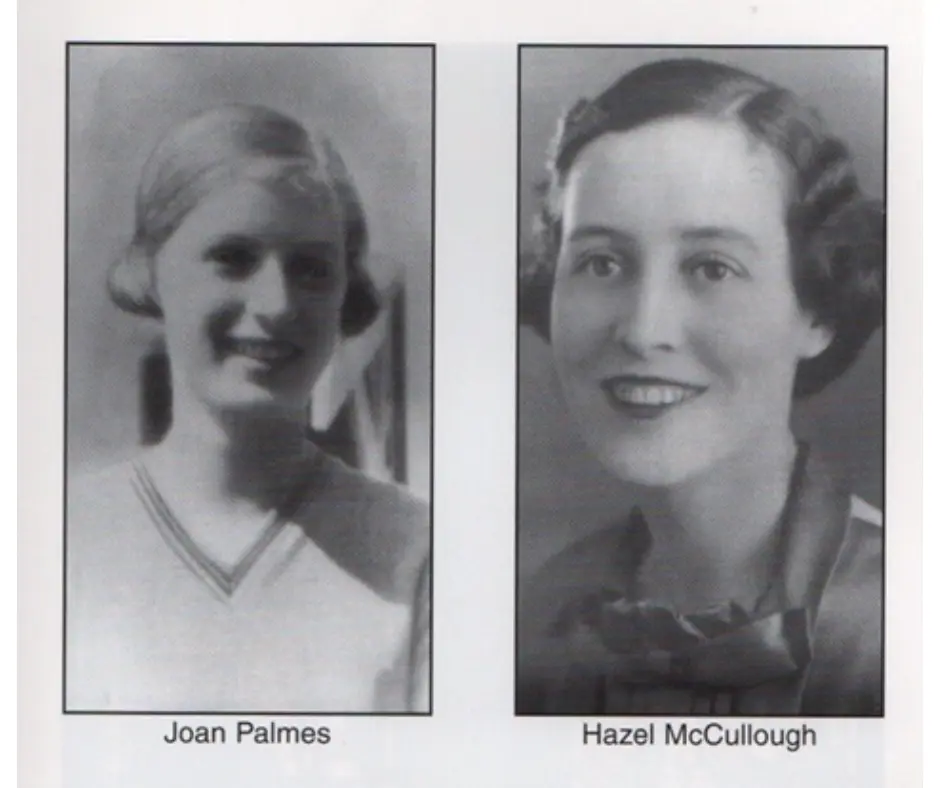
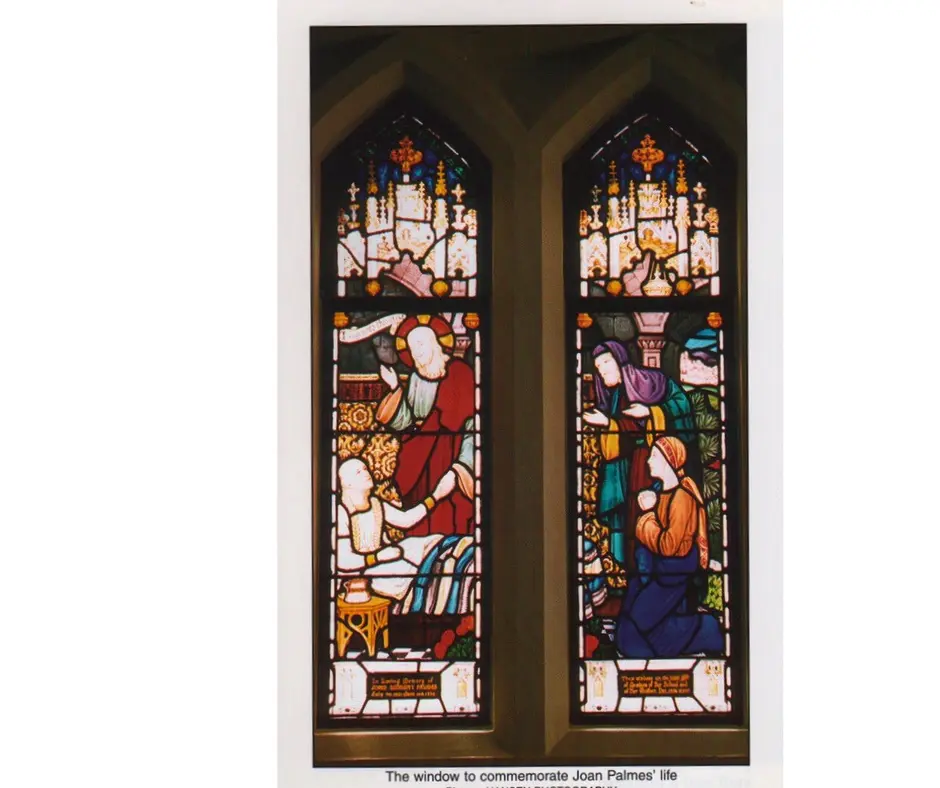
In June 1936, a boarder named Joan Palmes died after a short illness within a month of her 15th birthday.
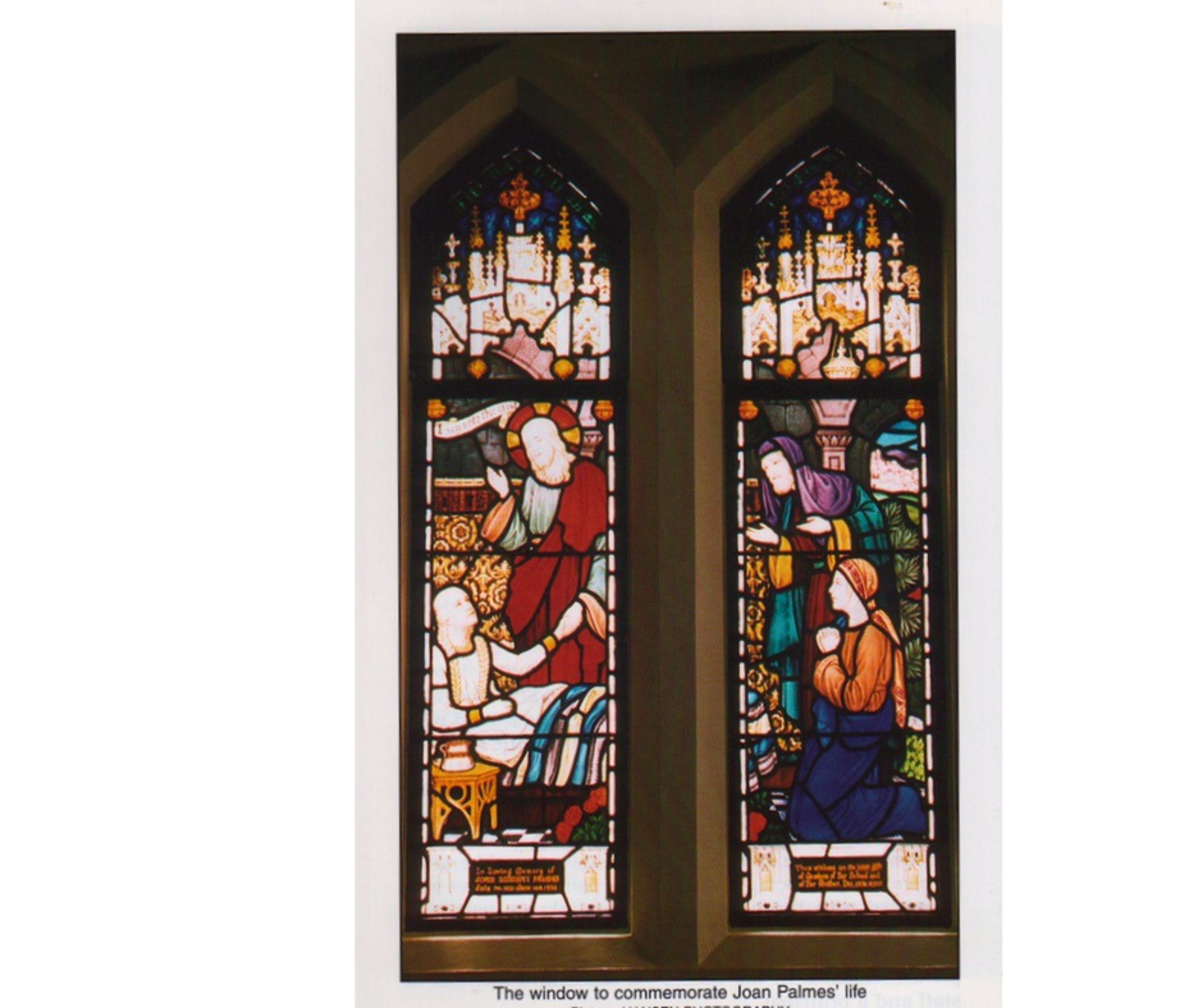
Together, the school and her mother decided that a pair of stained glass windows in the library would be a fitting memorial and chose as the theme the New Testament story of raising of Jairus’ daughter. The face of the girl in this window is modelled on Joan Palmes’ own face. A school magazine of the time described Joan as “beloved and admired by all for her calmness and sweet gentleness, as well as for her quiet industry and dedication to her duties”. The windows were dedicated at a service on March 25, 1937.
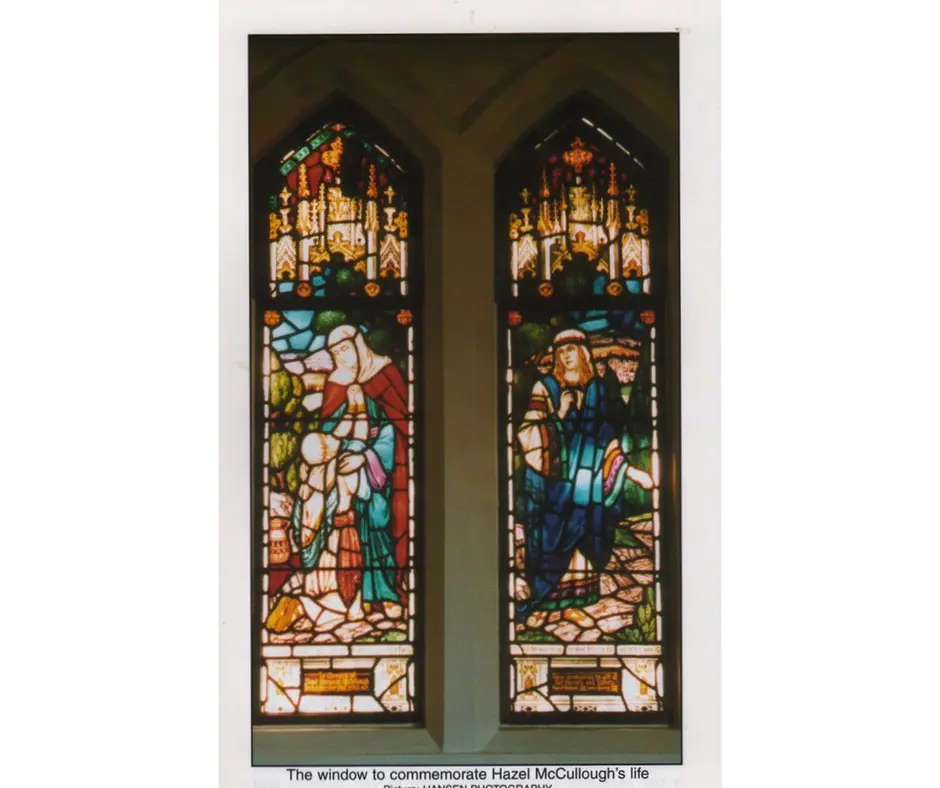
Only a month before this service the school had received a further shock with the news of the death of Hazel McCullough. The second of five sisters all educated at Somerville House, she had also served as a Science teacher there for four years before leaving on an overseas trip. While staying with her family and friends in Singapore, on her way to London, she had been killed in a car accident. The windows, given by her parents and sisters, depict the Old Testament story of Ruth and Naomi. Miss Jarrett, at the service of dedication on April 29, 1938, spoke of Hazel McCullough’s great capacity for friendship, adding “The subject chosen… for her memorial is in harmony with that quality – the loyal devotion and loyalty in friendship of the two women, Ruth and Naomi, who have come to a parting of the ways. It should be an inspiration to those who read in this quiet room.”
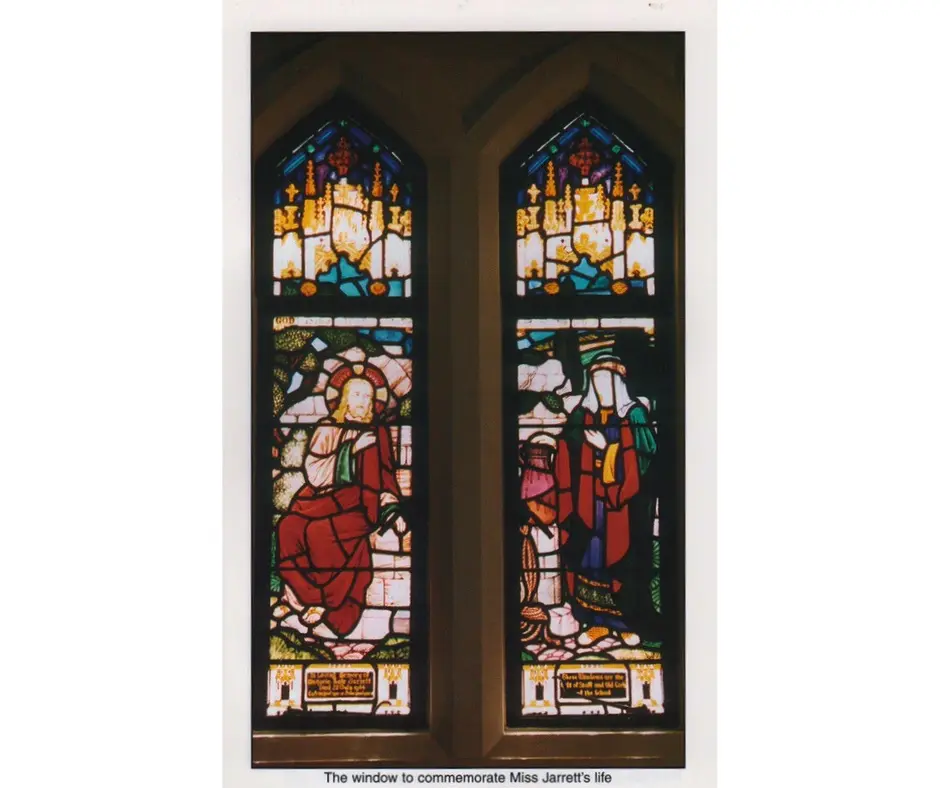
The third set of windows, given by the staff and Old Girls and dedicated on April 3, 1949, commemorates the life and work of Miss Jarrett, Co-Principal of the school with Miss Harker from 1920-1931 and sole Principal from 1932-1940. She had died in 1944, after a long illness. Miss Harker chose the theme of these windows: Jesus talking to the woman of Samaria, telling her “God is a spirit and in truth”, a theme which was echoed in the anthem sung at the dedication service. Miss Harker spoke of her friend and colleague as a “great and gracious lady”, a scholar, a leader, and a devout Christian, continuing “I would remind both past and present pupils of … her sincerity and singleness of purpose; her capacity for detail and for taking infinite pains in all she did and said; her loyalties to the best things in life she knew – and in which she included this school; her humility in the time of victory, and her resolution in the hour of defeat.”
All the stained glass windows were made by Mr William Bustard, an English-born stained-glass artist who had worked in England, Ireland, various European countries and the United States before migrating to Queensland in 1921. His work is to be found in buildings throughout Australia, including St John’s and St Stephen’s Cathedrals and the City Hall in Brisbane.